- 833-603-1840
- info@jprplumbingnewton.com
- Mon - Fri: 9:00 - 21:00

New Hyde Park, NY
When the kitchen sink, the tub, and the toilet all start draining slowly on the same day, the problem is rarely three separate clogs. It is usually the main sewer line. JPR Plumbing clears sewer line blockages in New Hyde Park homes and helps you understand why the line backed up.
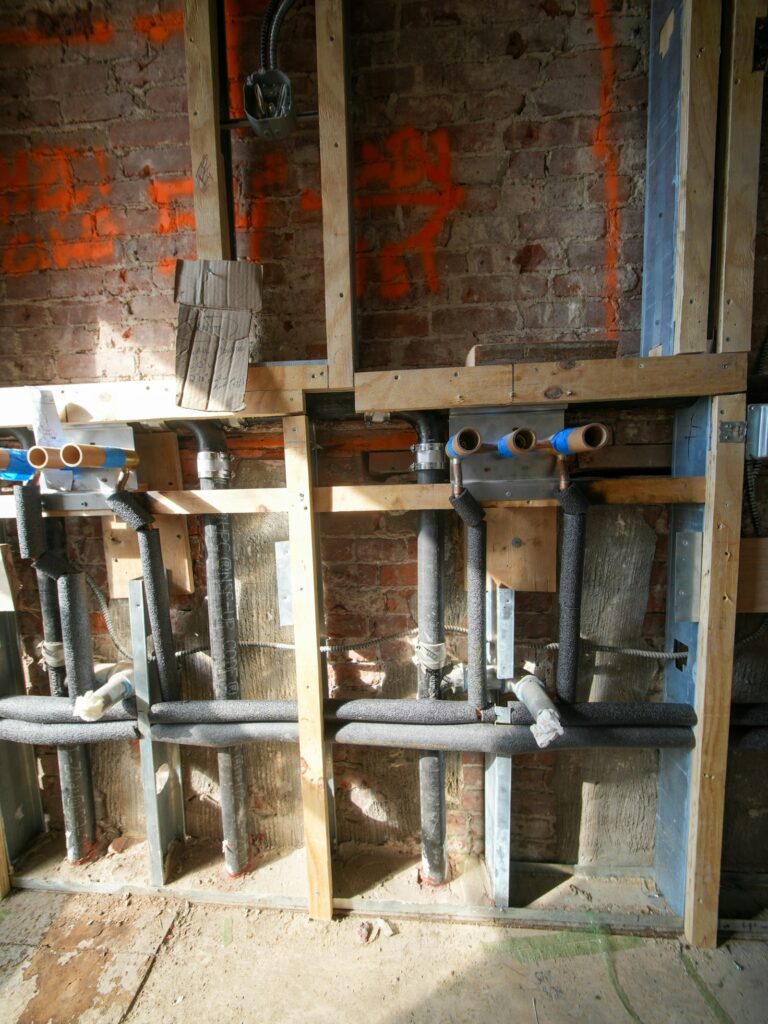
Every drain in the house empties into one main line that carries wastewater to the street. When that line is blocked, water from every fixture has to go somewhere, and it rises at the lowest openings first, often a basement floor drain, a lower-level shower, or a ground-floor toilet.
Clearing a sewer backup means opening the main line, usually through a cleanout, and removing the blockage. If backups keep happening, a camera inspection can show whether roots, a sag, or a damaged section is to blame, so the next step is based on what is actually in the pipe.
If sewage is in the house: stop using all water in the home, including the washing machine and dishwasher. Keep people and pets away from the affected area, avoid skin contact with the water, and stay clear of outlets and appliances near it. Wear gloves and boots if you must move anything.
Warning signs
The first row shows signs of a main-line problem, the second lists common causes, and the third explains what a plumber does.
When several fixtures slow down at the same time, the shared main line is the likely cause.
Wastewater appearing in a floor drain or lower-level shower is a classic sign of a backup.
Gurgling toilets and a sewer smell can come before water starts to rise.
Fats and wipes collect in the main line and gradually close it off.
Roots can enter older sewer pipe through joints and catch debris.
A low spot or cracked section can hold debris and slow the flow.
The blockage is cleared through a cleanout with equipment suited to the pipe.
A camera inspection may be recommended to find the cause of repeat backups.
The plumber tells you whether a cleaning will do or whether the pipe needs repair.
New Hyde Park homes
Nassau County’s summary of sewer districts by community lists the county Department of Public Works as the local sewer authority for New Hyde Park. A blockage in the line between your house and the street is usually a private repair, while problems in the public sewer go to that office. Because the village spans the Town of Hempstead and the Town of North Hempstead, permit questions for any follow-up repair can depend on which side of the village you live on.
If the lower level is finished, a backup can damage flooring and walls quickly. Make sure the cleanout is accessible rather than hidden behind a finished wall. Keep storage away from it too.
If nearby homes are having backups at the same time, report it to the sewer authority. The problem may be in the public line.
Keeping grease, wipes, and paper towels out of the drains is the simplest way to lower the risk of another backup.
The work depends on where the blockage is, what caused it, and how easy the cleanout is to reach. A grease or paper blockage may clear in one visit. Roots, a sagging section, or a cracked pipe usually need further repair. A camera inspection helps show which applies, and you will hear the options before any repair begins. If the backup damaged a finished area, drying it promptly helps limit further problems.
Related services
If only one sink or tub is affected, the blockage may be closer to that fixture, and clearing an individual clogged drain may solve it. For other household plumbing needs, take a look at the kinds of problems we fix in New Hyde Park.
Homes just outside the village, in North New Hyde Park, Garden City Park, Manhasset Hills, Lake Success, Floral Park, or Stewart Manor, are covered too.
Call (833) 603-1840 Monday through Friday, 9:00 a.m. to 9:00 p.m. Tell us where wastewater has appeared and whether the lower level is finished.
Questions
The lowest fixture in the house is usually the first place wastewater appears when the main line is blocked. Stop using water and call for help.
No. Any water you use has nowhere to go and will add to the backup.
The line on your property generally is. If the problem is in the public sewer, the local sewer authority is responsible.
Roots, a sagging section, or damage in the line often cause backups to come back. A camera inspection can show which it is.
Wear gloves and boots, avoid skin contact, and disinfect hard surfaces. For a large backup, or anything that has soaked up wastewater, professional cleanup is the safer choice.
You can also learn about storms and sewer backups in our homeowner guide, and read about staying home after a sewer backup when you have a few minutes.