- 833-603-1840
- info@jprplumbingnewton.com
- Mon - Fri: 9:00 - 21:00

Hollis, Queens
Sewage rising through a basement floor drain, toilet, or laundry sink is a health risk that needs fast attention. JPR Plumbing helps Hollis homeowners find out why the sewer line is backing up and clear the blockage. Call (833) 603-1840.
A sewer backup happens when wastewater can’t leave your home and comes back up through the lowest drains. In Hollis houses, that is usually a basement floor drain, a basement toilet, or a laundry sink.
The city has upgraded many sewers and water mains in southeast Queens, but the pipe that runs from your house to the street, called the sewer service line, is generally the property owner’s responsibility. If that line is blocked by grease, wipes, or roots, or if it is cracked or sagging, backups can still happen even after the street sewer is replaced. In a basement with laundry, storage, or living space, a backup can do real damage, so finding the cause quickly matters. You can see our full list of JPR Plumbing services on our homepage.
These are the warning signs of a sewer backup, the most common causes, and how a plumber works to clear the line and restore flow.
What to know
If the pipe is damaged, the plumber explains what repair may be needed.
Dirty water rising from a basement floor drain is the most common sign of a sewer backup.
When several fixtures slow down together, the main line may be partly blocked.
A strong sewer smell near basement drains can mean wastewater isn't flowing away.
Grease and wipes build up inside sewer lines until wastewater can't pass.
Roots can enter older sewer lines through cracks, and aging pipe can sag or break.
A blockage near the house trap or cleanout can stop wastewater from leaving.
A plumber checks the cleanout and drains to find where the line is blocked.
Professional tools are used to remove the blockage and restore flow.
Stop using sinks, toilets, and appliances, keep people away from the area, and call (833) 603-1840.
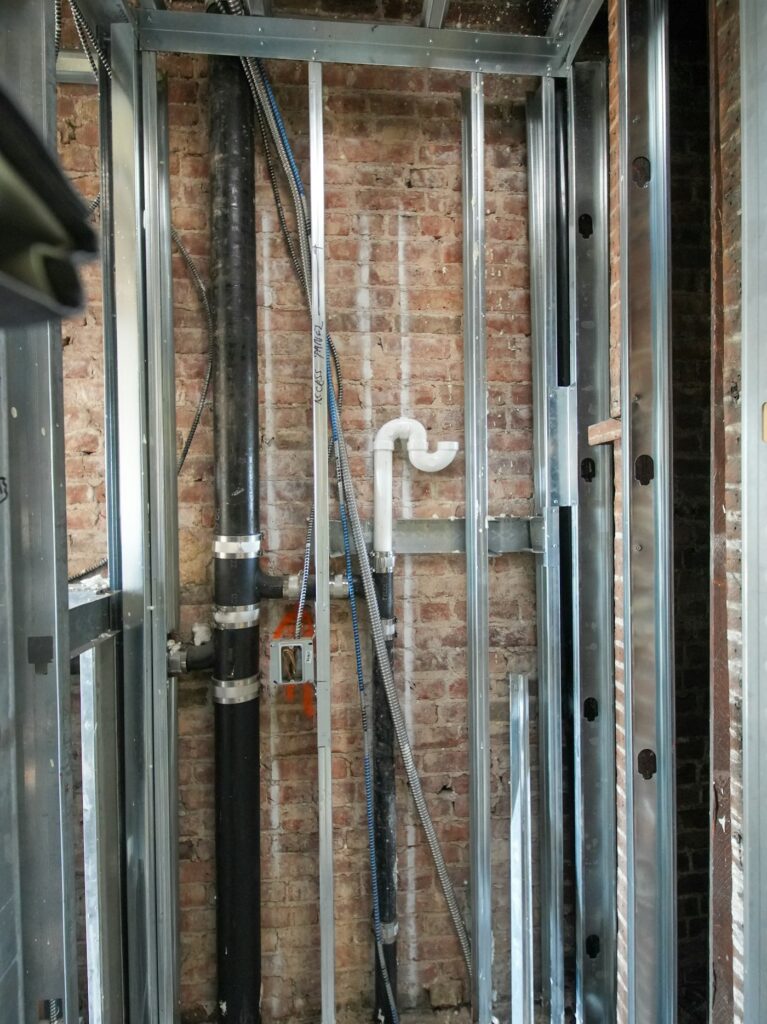
Hollis considerations
Hollis is part of southeast Queens, where the city has invested heavily in sewers and water mains.
NYC DEP reported completing a $20.5 million project across 20 blocks of Hollis and Queens Village that replaced water mains, some installed before World War II, and added new storm sewers and catch basins. DEP called it part of a $1.9 billion effort to improve drainage across southeast Queens.
Street upgrades don’t replace the pipes on your property. Your sewer service line still needs attention if backups continue.
Backwater Valves. A backwater valve is designed to keep sewage from flowing back into a home. Whether one is right for your house depends on your plumbing.
Stop using water in the house during a sewer backup, keep people and pets away, and clean and disinfect affected areas carefully.
The cost of clearing a sewer backup depends on what is blocking the line and the condition of the pipe. Common factors include:
A plumber can explain what caused the backup and whether the pipe needs repair. If backups keep happening, the plumber can also talk with you about whether a backwater valve makes sense.
Sewer problems often overlap with other basement water issues. You can also see all of our plumbing services in Hollis. Related services include:
We serve homeowners across Hollis, Hollis Hills, and Holliswood, from the Hollis Avenue and Farmers Boulevard areas to the blocks near Jamaica Avenue. Contact us to confirm availability at your address.
Questions
New street sewers help drainage, but the line from your house to the street is generally the owner’s responsibility. If it is blocked or damaged, backups can still happen.
Stop using water, keep people away from the sewage, and call a plumber to check the line.
DEP reported a $20.5 million project in Hollis and Queens Village that replaced water mains and added storm sewers and catch basins.
Yes. Roots can grow through cracks or loose joints in older pipes and trap debris.
A backwater valve is designed to keep sewage from flowing back in. A plumber can tell you if one suits your home.
Sewage can carry germs. Wear protection, keep others away, and disinfect carefully.
Yes, if the cause isn’t addressed. A plumber can explain options to lower the risk.
Call (833) 603-1840, Monday to Friday, 9:00 a.m. to 9:00 p.m., or request service online. Tell us which drains are backing up.