- 833-603-1840
- info@jprplumbingnewton.com
- Mon - Fri: 9:00 - 21:00

Manhasset, NY
A house that sits empty for part of the winter, or a garage that stays colder than the rest of the home, is exactly where a pipe is most likely to freeze and split. JPR Plumbing repairs burst and frozen pipes in Manhasset homes and checks the surrounding lines so one cold night does not turn into several repairs.
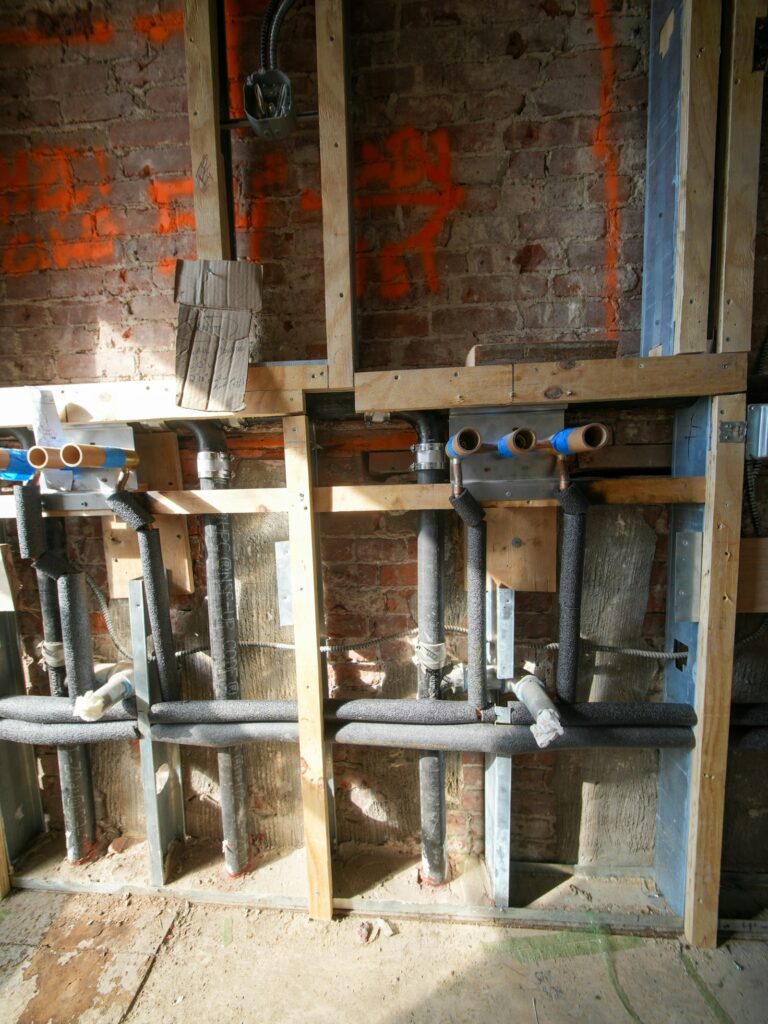
Water pipes hold water under steady pressure. When a section freezes, the ice expands and can crack the pipe or push a fitting apart. Often nothing happens until the ice melts; then water pours through the opening.
Repair means stopping the flow, cutting out the damaged length, and installing new pipe and fittings that suit the rest of the system. Because cold air rarely affects just one spot, the plumber also checks the pipe on both sides of the break and any other lines running through the same cold space.
Older steel pipe that has corroded from the inside can also split under normal pressure in mild weather, so not every burst pipe is a winter problem.
If a line has split: shut the main valve, open a faucet on the lowest floor to drain pressure, and stay clear of outlets and light fixtures near the water. Never thaw a frozen pipe with a torch or open flame.
What to watch for
The top row covers warning signs, the middle row explains why pipes fail, and the bottom row shows how the repair works.
In very cold weather, a tap that suddenly gives a trickle or nothing at all may be fed by a frozen line.
Stains, drips, or bubbling paint below a pipe run can mean a split you cannot see.
The sound of water moving when nothing is turned on can come from a broken line.
Garages, crawl spaces, and enclosed porches lose heat quickly in a deep freeze.
A home left without enough heat while the owners are away gives pipes time to freeze solid.
Corrosion weakens joints, so pressure or a hard freeze can push them apart.
With the supply off, the failed length is emptied of water.
The split length is cut out and replaced with new pipe and fittings.
The line is refilled and watched for leaks before walls or ceilings are closed.
Manhasset homes
Homes near Manhasset Bay can see raw, windy cold, and pipes in garages, along exterior walls, and feeding outdoor faucets feel it first. Lines that run under a garage floor or through a room built over a crawl space are worth checking before winter arrives.
The state’s winterize your home guide lists insulating exposed water pipes as a basic step. Garage and crawl space lines are the place to start.
Close the inside valve feeding each outdoor spigot, open the spigot to drain it, and disconnect hoses before the first hard freeze.
Keep the heat at a steady, moderate setting, have someone check the house, and consider closing the main valve while it is empty.
The work depends on the pipe material and size, where the break sits, how easy it is to reach, and how much of the line was damaged. A split in an exposed garage pipe is usually simpler than one inside a finished wall. If water soaked drywall or flooring, drying it quickly limits further damage. You will hear what the repair involves before any work starts.
Related services
If water was escaping for a while before anyone noticed, it is worth checking that nothing else is leaking, and fixing an active leak elsewhere in the house can be handled on the same visit. For other kinds of plumbing trouble, see what we help homeowners deal with around Manhasset.
Neighbors in Munsey Park, Plandome, and Flower Hill can call us too, as can homeowners in Manhasset Hills and North Hills.
Phone (833) 603-1840 Monday through Friday between 9:00 a.m. and 9:00 p.m., or send a request online with your address and a note on where the water is coming from.
Questions
Close the main water valve, then open a low faucet to release the remaining pressure. Move belongings away from the water and call for a repair.
Frost on an exposed pipe, or a faucet with little or no flow during very cold weather, are the usual signs.
Gentle warmth can help, but never use an open flame, and keep electrical devices away from any water. If you are unsure, leave it for a plumber.
Ice can hold a crack closed while the pipe is frozen. Once it thaws, the water escapes.
Usually only the damaged section is replaced. Badly corroded pipe nearby may also be worth replacing, and you will hear the options first.
If you like to understand the problem first, start with our notes on patching versus replacing a burst pipe. Our guide to insulating pipes in cold spaces may help too.